
Mixed circuit protection (MCP)
MCP is Synaptec’s protection for mixed overhead and cable circuits.
MCP tells the protection scheme whether a fault on a mixed circuit is in a cable section or on the overhead line, in time to block auto-reclose for a cable fault before the breaker opens. Overhead faults reclose as normal.
MCP is part of Reflex, Synaptec’s range of ultrafast protection for complex and remote circuits and assets, and runs on Distributed Electrical Sensing (DES).
Get in touch

Aneesh Chandran
Sales Engineering lead

Prasanta Das
Regional Sales Director - India & Gulf States

Dr Oyedotun E. Oyewole
Sales Engineer
The industry challenge
Circuits that combine overhead line and underground cable are becoming common at 110 to 400 kV. Undergrounding programmes, planning constraints on new overhead routes, weather resilience, and new loads such as metros and data centres beside existing corridors all add cable sections, often as loop-in, loop-out cable tails.
Most overhead line faults are transient, so auto-reclose restores supply in under a second. Cable faults, on the other hand, are almost always permanent. Reclosing onto a faulted cable cannot restore supply: instead, it adds damage at the sealing ends and joints, can spread it to adjacent plant, and puts people near the cable at risk. The repair then takes weeks.
Distance protection cannot reliably tell which section is faulted. A cable’s impedance to a fault does not vary linearly with distance, its charging current is high, its sheath bonding adds circulating currents, and every transition reflects travelling waves. Differential protection at each transition would solve it, but traditionally needs a relay, a power supply, a communications link, and a time source at each transition tower.
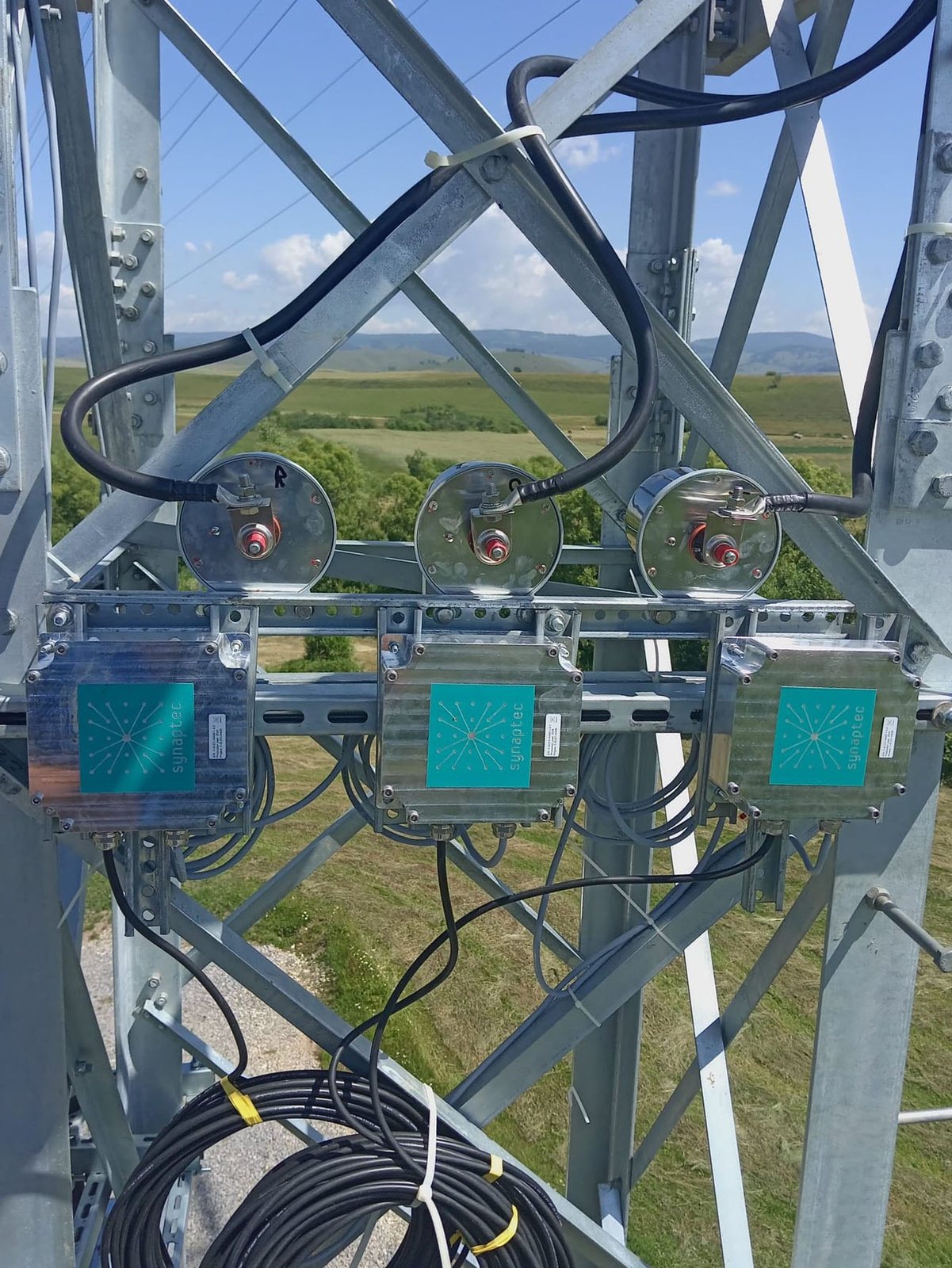
Passive sensors on a 110 kV transition tower in Romania
Auto-reclose policies on mixed circuits
| Policy | Consequence |
|---|---|
| Block auto-reclose on the whole circuit | Every transient overhead fault becomes a sustained outage, with line patrols, manual restoration, and lost customer minutes |
| Allow auto-reclose on the whole circuit | A cable fault is reclosed onto, damaging sealing ends and adjacent plant, putting people at risk, and turning a short interruption into a repair lasting weeks |
| Allow auto-reclose only where the cable is a small share of the route | Less exposure, but the relay still does not know where the fault is |
| MCP | Auto-reclose blocked for cable faults and permitted for overhead faults, decided zone by zone in under 10 ms |
Our solution
Passive sensors at each cable sealing end form protection zones around every cable section. The DES Interrogator in the substation runs line differential protection (ANSI 87L) on every zone. A fault inside a cable zone produces an auto-reclose block to your Main 1 and Main 2 relays by dry contact or IEC 61850 GOOSE. A fault outside every cable zone is on the overhead line, and auto-reclose proceeds as normal.
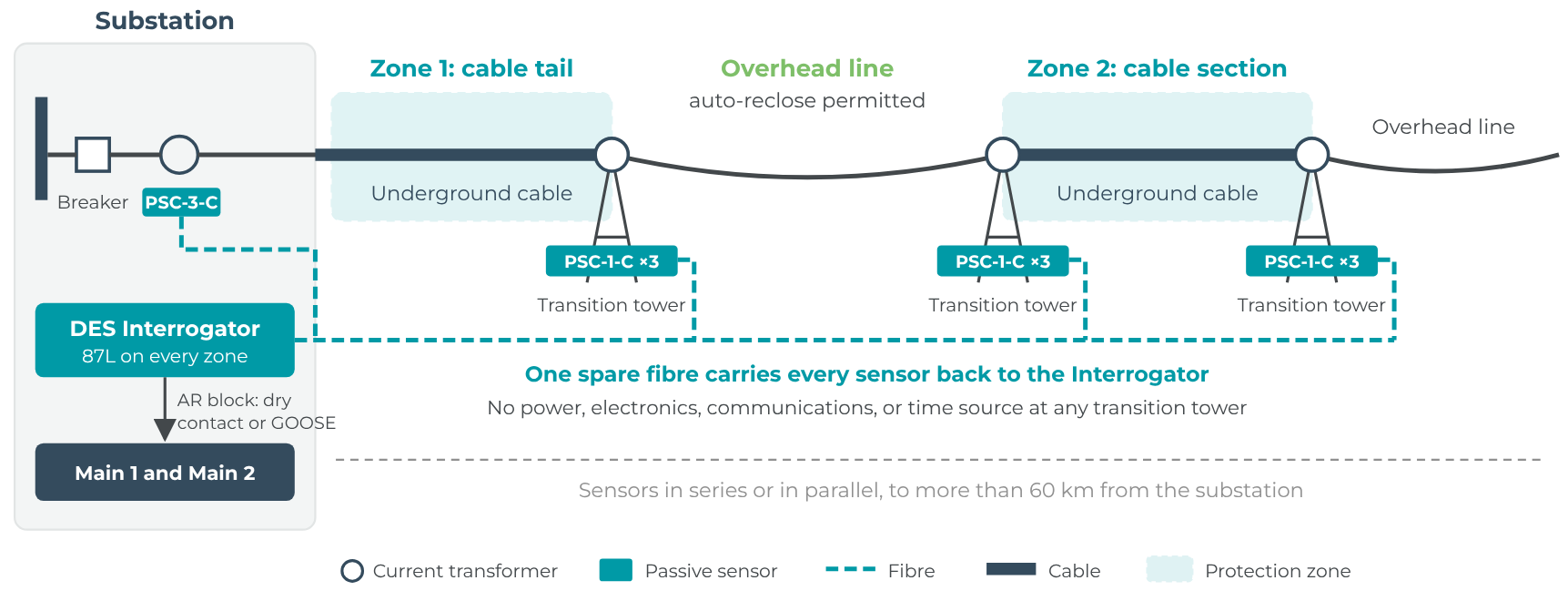
How it works
Passive sensors
At each transition tower, a split-core current transformer fits around each cable below the termination bushing, and a single-phase Passive Secondary Converter (PSC-1-C), rated IP68, connects to its secondary. Where measurements are required in the substation, a rack-mounted three-phase PSC-3-C connects to spare cores of the existing line CTs. Each PSC encodes the CT secondary current as a shift in the wavelength of light, which electromagnetic interference cannot alter, and returns it on standard single-mode fibre. There is no fibre to wind around the conductor and no specialist work at the tower.
DES Interrogator
A single 3U rack-mounted DES Interrogator in the protection and control room reads every sensor on the fibre, sampling at 4.8 kHz. All measurements are synchronised to within one microsecond by the Interrogator itself, with no satellite or network time source at any sensor. Synaptec’s patented time-of-flight correction keeps phase and time-stamp accuracy within IEC limits at any practical fibre length.
The Interrogator runs line differential protection (ANSI 87L) on every zone, with overcurrent and earth fault (ANSI 50 and 50G) where required. It issues trip and auto-reclose block signals by dry contact or IEC 61850 GOOSE, publishes IEC 61850-9-2 Sampled Values to your relays, and records time-synchronised fault data at every sensor.
Zones that follow your network
A zone is formed between any two sets of sensors, so it can hold one cable section or several, in series or in parallel. Single cable tails, double circuits, multi-ended circuits, and routes with several cable sections are all protected from one Interrogator, and zones are added by adding sensors. Commissioning is carried out centrally from the substation, without test sets at the tower.
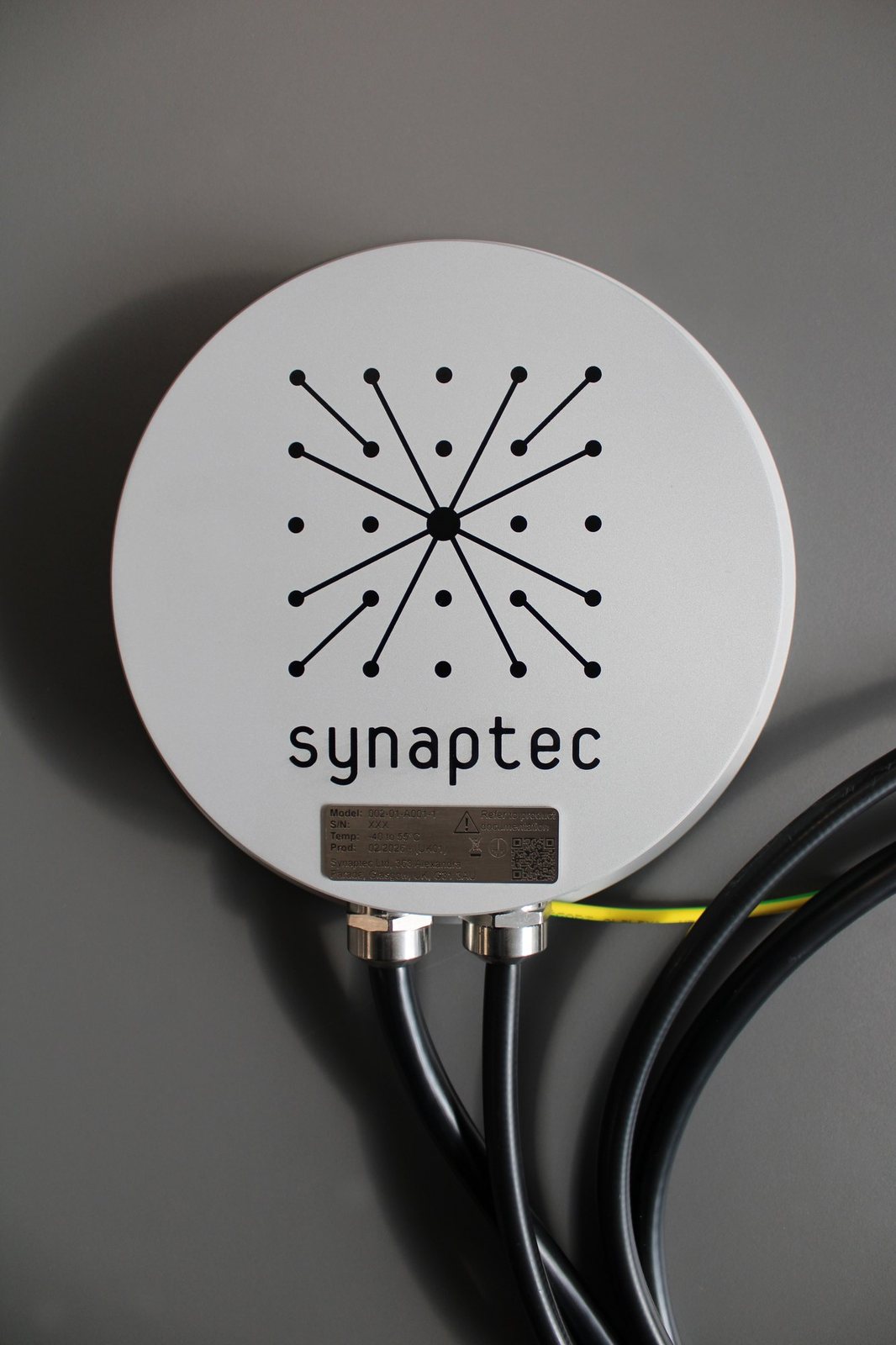
PSC-1-C single-phase Passive Secondary Converter, rated IP68
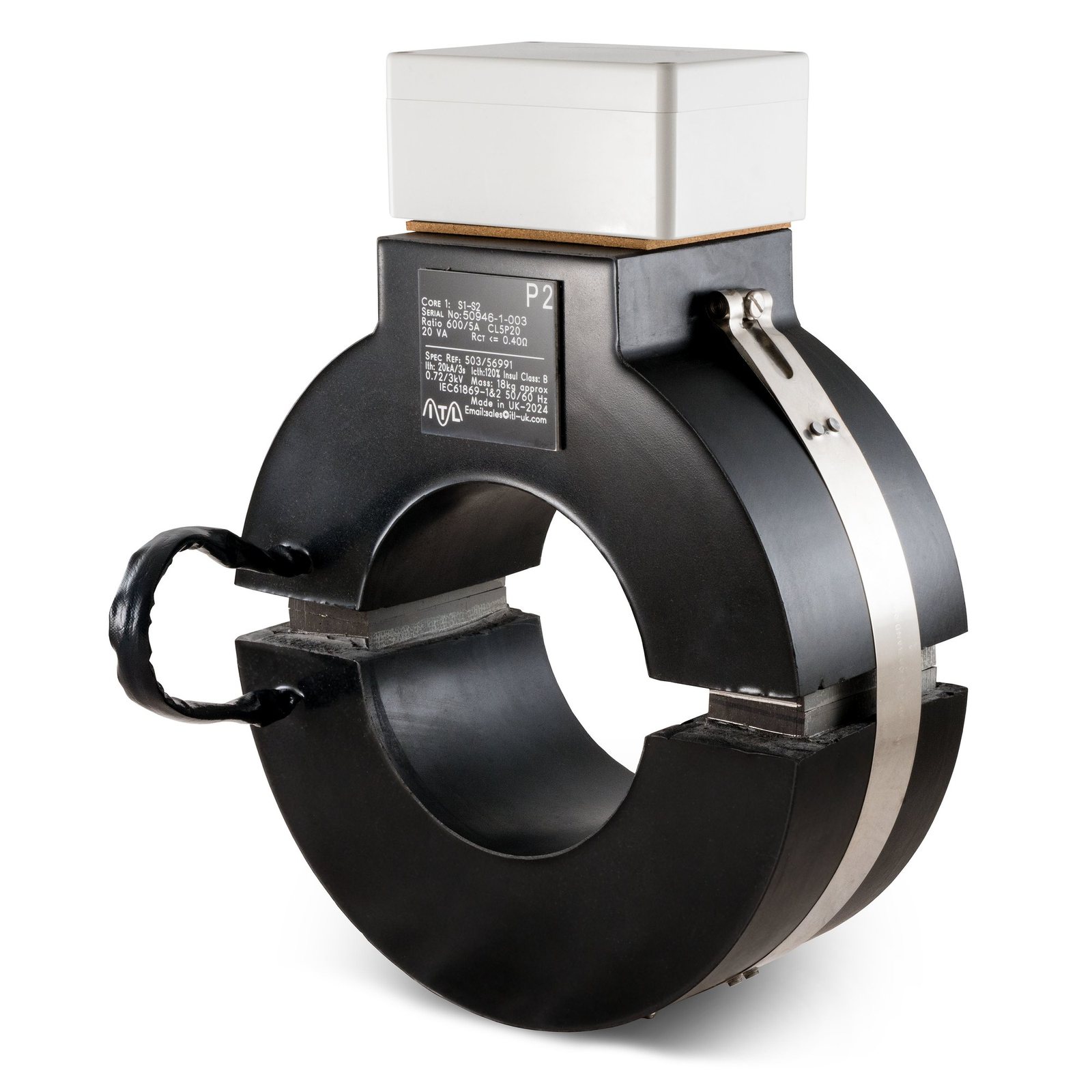
Split-core CT for fitting around a cable in service
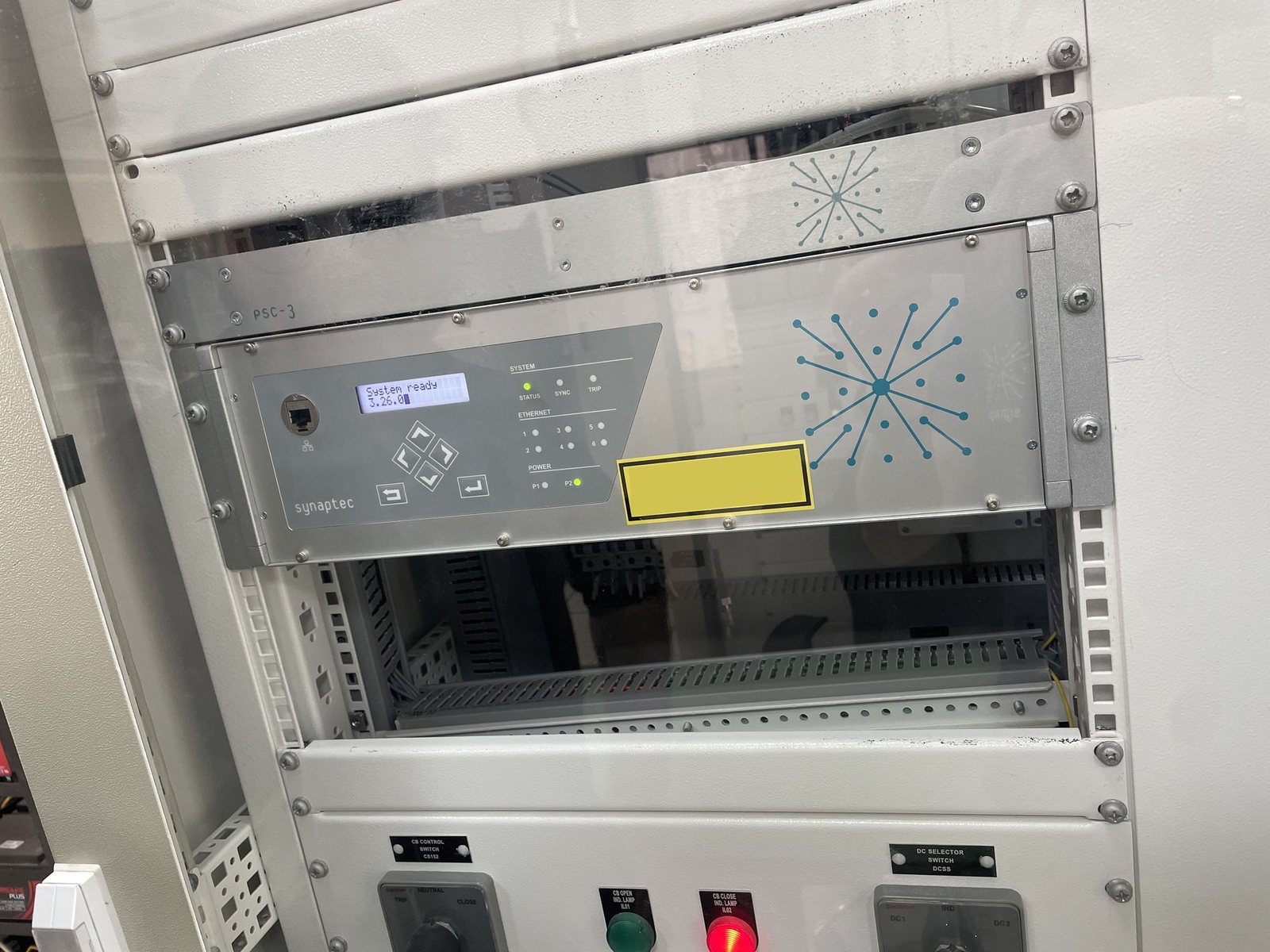
DES Interrogator in a protection panel at Tata Power’s 110 kV Mandale substation, Mumbai
MCP at a glance
| Item | MCP |
|---|---|
| Protection | Multi-zone line differential (87L); overcurrent and earth fault (50, 50G) |
| Fault identification | Under 10 ms in service |
| Reach | More than 60 km from the substation to the furthest sensor |
| Capacity | Up to 30 sensors and ten protection zones per Interrogator, confirmed at design stage |
| Accuracy | Class 1/10TPM to IEC 61869-13 |
| Outputs | Dry contacts; IEC 61850 GOOSE; IEC 61850-9-2 Sampled Values |
| Sensors | PSC-1-C single-phase, IP68; PSC-3-C three-phase, 1U rack-mounted |
Proven in service
Reflex uses the same DES Interrogators and passive sensors that Synaptec supplies for protection and cable systems monitoring worldwide. In more than 1.5 million sensor-hours of operation, no Synaptec sensor has ever failed in service.
>1.5 million
sensor-hours of operation (October 2026)
<10 ms
to identify a faulted zone on mixed circuits in service
>60 km
from the substation to the furthest passive sensor
| Region | Protection in service and in delivery |
|---|---|
| India | Tata Power: MCP on two 110 kV circuits at Mandale substation, Mumbai, supplying the metro, with further circuits in manufacture. Adani Electricity Mumbai: MCP on a 220 kV circuit at Chandivali substation, with further circuits in manufacture. |
| Europe | Swissgrid: auto-reclose blocking on three 220 kV mixed circuits, with 48 passive sensors in eight protection zones. Distribuție Energie Electrică România: MCP on a 110 kV mixed circuit at Remetea substation. SP Energy Networks (UK), RTE (France), and EDP (Portugal): projects and trials in delivery. |
| Middle East | Dubai Electricity and Water Authority: MCP on mixed circuits, the first commissioned in 2026, with further circuits in delivery. National Grid SA (Saudi Arabia): trial in delivery. |
| Development with network operators | SSEN: unit protection of a multi-ended 132 kV circuit, co-published at PAC World 2022. Statnett: busbar protection across six feeders from one DES system at Furuset substation, near Oslo. |
In service: Tata Power, 110 kV Mandale substation, Mumbai
MCP was commissioned on two 110 kV mixed circuits in January 2026, protecting the loop-in, loop-out cable sections that feed the Mumbai metro traction supply. By June 2026 the circuits had seen three overhead line faults. Each time the scheme remained stable and the line auto-reclosed successfully.
“The deployment of Synaptec’s MCP system has demonstrated reliability and effectiveness in providing auto-reclose functionality for the 110 kV Mandale–Dharavi–Vikhroli hybrid circuit.”
Girish Jawale, Head, Technical Services (T&D, MO), Tata Power, June 2026
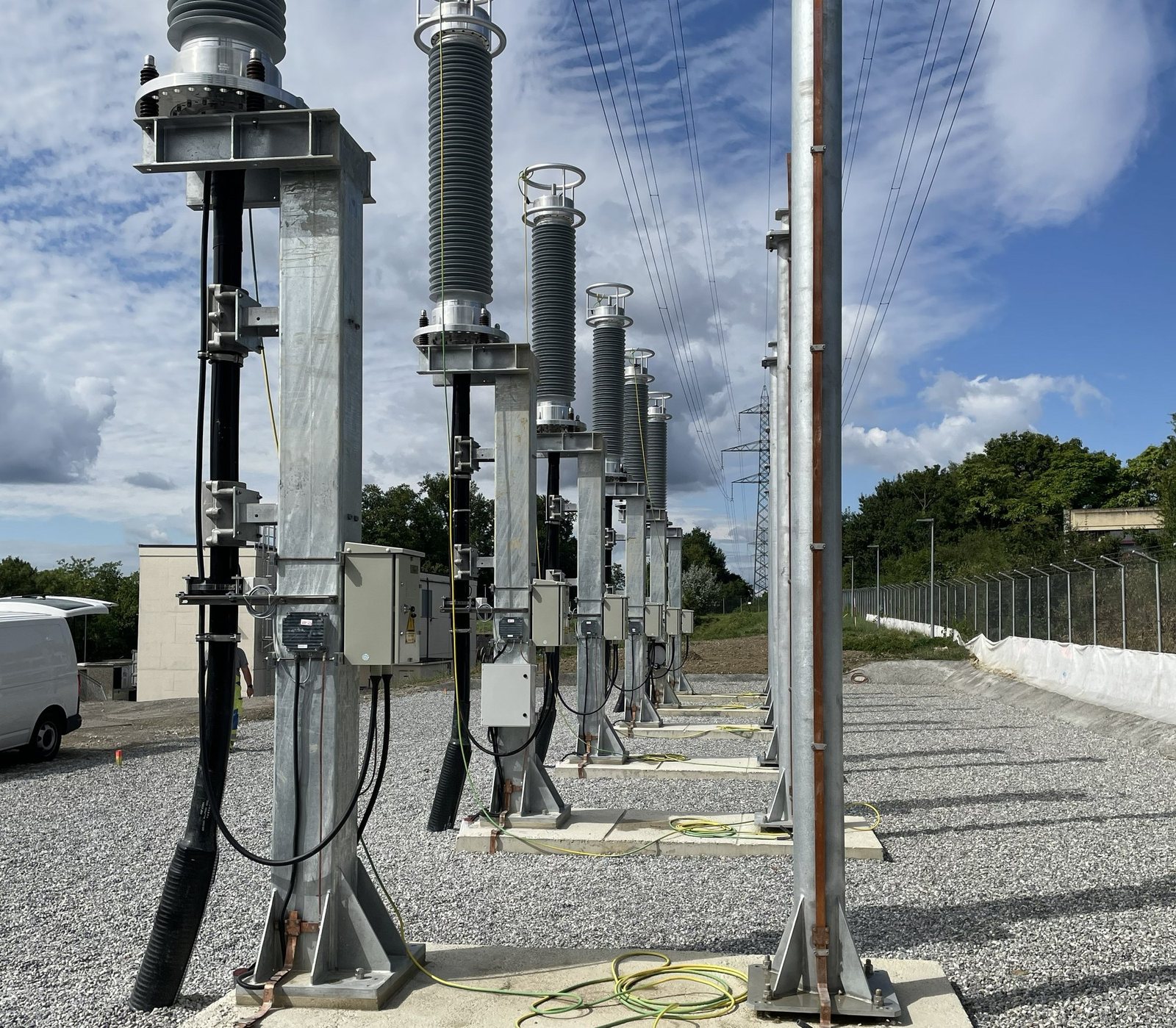
Cable sealing ends fitted with passive sensors at a 220 kV substation in Switzerland
Published and peer reviewed
In CIGRE Technical Brochure 587 (2014), Working Group B5.23 found fibre Bragg grating sensing, the principle behind DES, to be the only method assessed that combined full discrimination between cable and line faults with no power supply at the transition and one system for every cable section. Synaptec’s work with SSEN, SEL, and Ørsted has been published at PAC World and CIGRE, including the PAC World 2025 Best Paper. See Technical Publications.
Reflex brochure
The Reflex brochure covers MCP and RTP, how each one works, and the service record of the Synaptec passive sensors and DES Interrogators they share, in eight pages.
Talk to us about your mixed circuits
Start with one circuit. Send us the single-line diagram and the fibre route, and we will propose a protection design with a budget price, at no cost. Your preferred contractor or Synaptec’s local partner installs the equipment, and Synaptec commissions it.
Applications


Related posts

Multi-zone differential protection applied to offshore wind networks
PAC World Conference 2025 Authors: Steven Blair, Synaptec, UK Aneesh Chandran, Synaptec, UK Oyedotun Oyewole, Synaptec, UK Bogdan Kasztenny, SEL, Canada Alexander Tsylin, Ørsted, Denmark Date published: June 2025 Abstract This paper starts with a review of...

Protection methods used to reduce wildfire risk due to transmission and distribution lines
IEEE PSRC Working Group D45 Technical Report Authors: IEEE PSRC Working Group D45 Date published: May 2025 Introduction Wildfires (bush fires and forest fires) have become more frequent, intense, and damaging in recent years. The impact of fires is made worse by the...
Line differential protection for long-distance remote assets using passive optical sensing
PAC World Conference 2024 Authors: Iain Mckeeman, Elliot Hale, Fraser Cadger, Neil Gordon, Steven Blair Date published: June 2024 Abstract Distinguishing between faults on mixed conductor circuits can be challenging when relying only on measurements from within the...
Sectors we support

Power grids

Renewables