Case study: Adani Electricity Mumbai Ltd.
Aarey-borivali
Aneesh Chandran | 3 minute read | 16 June 2026
Continuous cable health monitoring where failure is not an option
Transmission operator Adani Electricity Mumbai Ltd. (AEML) required centralised, real-time monitoring of cable screen currents on its Aarey–Borivali 220 kV double circuit at the Aarey substation.
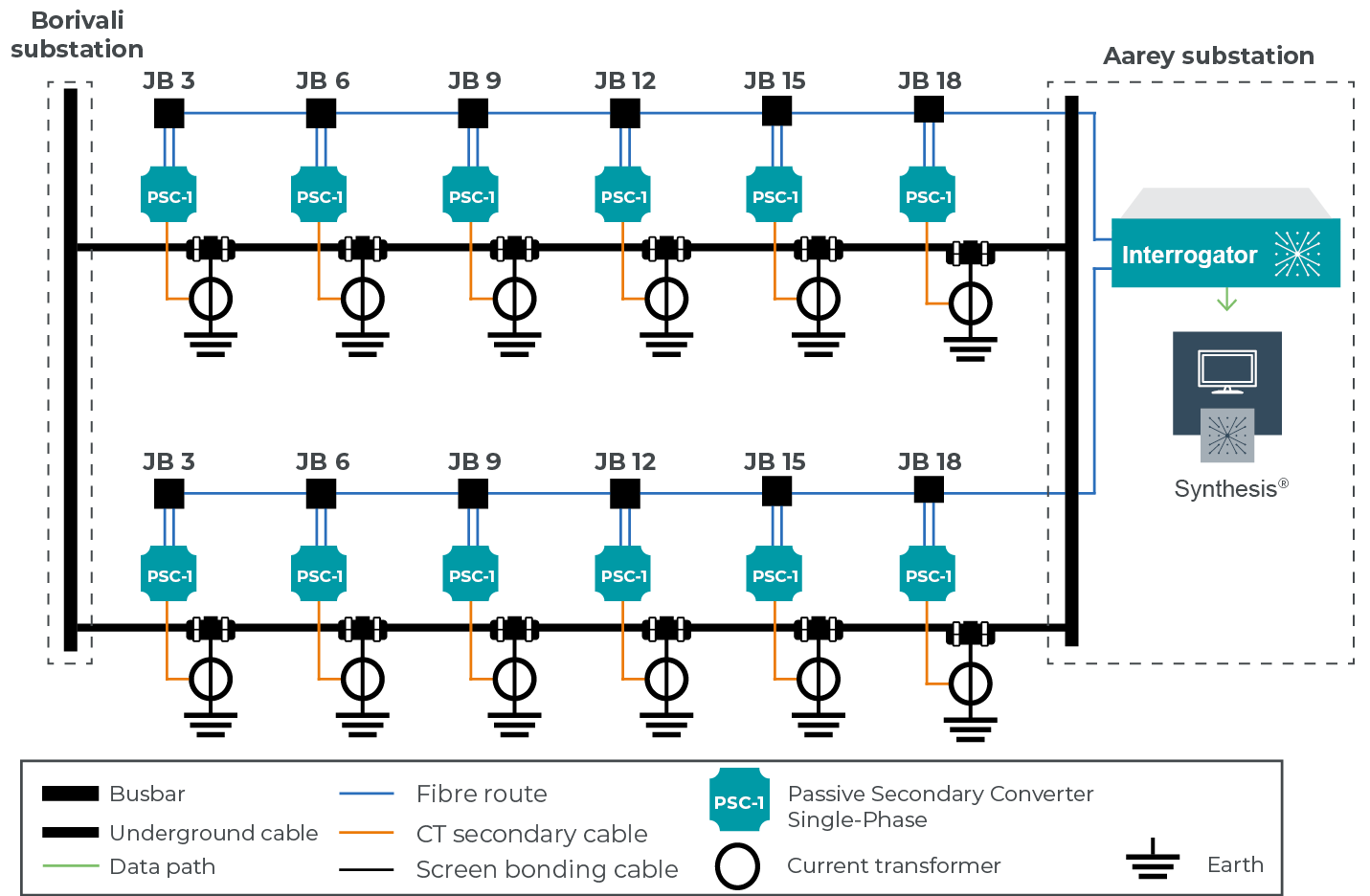
Synaptec supplied, through Madhav Engineers Pvt. Ltd. (MEPL), a Greenlight monitoring system based on its Distributed Electrical Sensing (DES) technology. The system provides continuous, IEC-compliant measurement of screen currents across 12 sensor locations – six per circuit – covering steady-state operation up to 400 A and fault events up to 12 kA, with all data aggregated at the Aarey substation.
Eliminate outage risk before it materialises
Identifies issues like water ingress, abnormal currents, and joint deterioration earlier, to avoid failure on critical feeders.
Remove the hazard of manual inspection
Automates dangerous manual inspection with continuous remote monitoring, feeding directly into SCADA.
Reduce operating cost
Insights from Greenlight monitoring permit the operator to intervene when problems are identified, optimising scheduled maintenance cost.
AEML is one of India’s leading urban power transmission and distribution companies, supplying electricity to more than three million customers across the Mumbai metropolitan area. AEML operates an extensive high-voltage transmission network, including the 220 kV corridor linking Aarey Substation with the Borivali substation that forms the basis of this project.
Synaptec’s partner, Madhav Engineers Pvt. Ltd. (MEPL), is a Mumbai-based specialist in electrical testing, operations, and maintenance equipment. MEPL acts as the primary point of contact with AEML.

The challenge
Mumbai is one of the most demanding environments on earth for high-voltage cable infrastructure. Rapid urban growth drives relentless increases in transmission demand; underground cabling is essential to allow development at density; there is no tolerance for supply failures serving millions of customers; seasonal monsoon conditions accelerate water ingress and corrosion at cable joint locations year after year.
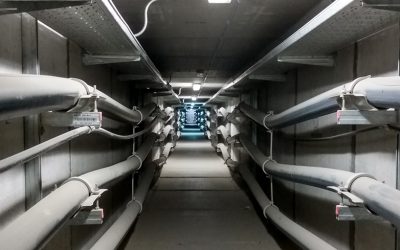
The Aarey–Borivali 220 kV underground cable route runs 12 km through this environment, with six intermediate joint bays per circuit – each a confined, hard-to-access location where screen currents must be monitored. Once cables are buried, there is no inherent visibility into what is happening along the route. Deterioration from water ingress, damage, or abnormal operating conditions builds silently until it becomes a fault.
Prior to this installation, periodic manual inspection of those joint bays was the only option available – not by choice, but because no alternative existed that matched space and budget constraints. Entering confined underground joint bays is hazardous work, operationally disruptive, and unable to detect gradual deterioration developing between visits.
The technical demands were equally significant. Sensors needed to cover a wide dynamic measurement range – from normal operating currents of 400 A up to fault currents of 12 kA – across joint bay locations separated by up to 1.8 km. Conventional monitoring solutions require local auxiliary power supplies, GPS time synchronisation, and dedicated data networks at each point, adding cost, installation complexity, and long-term increased maintenance burdens. Any chosen technology also had to deliver time-synchronised, phase-accurate data, compliant with IEC 61850-9-2LE across a 12 km area – a standard that competing fibre optic approaches cannot meet beyond 1.6 km without Synaptec’s patented time-of-flight correction.
Our solution
Synaptec proposed a DES-based Screen Current Monitoring system (Greenlight®), designed to address each of these constraints while making full use of AEML’s existing single-mode optical fibre infrastructure.
At each of the 12 monitoring locations, a ruggedised PSC-1-C (Passive Secondary Converter Single-Phase for Current) is paired with an industry-standard solid-core current transformer. Each PSC-1-C passively converts the CT secondary current into an analogue optical signal, requiring no local power supply, data networks, GPS receiver or ongoing maintenance. The sensors are serially connected over a single optical fibre back to the Aarey Substation, where rack-mounted DES Interrogator continuously sample all 12 sensors on their respective circuits at 4 kHz.
Synaptec’s patented time-of-flight correction is applied within the DES Interrogator, ensuring that measurement timestamps are accurate to within ±4 µs and phase error remains below 1° across the full 12km sensor span. This enables the system to publish fully compliant IEC 61850-9-2LE Sampled Values data streams with no requirement for GPS or PTP time sources at the remote sensor locations.
A Synthesis® Server, rack-mounted at the Aarey Substation, subscribes to data from the Interrogator, builds a vital data history for all locations, integrates all sensor measurements, performs long-term condition monitoring analysis, and makes processed data available to AEML’s SCADA system via IEC 61850 MMS and secure REST API.
Because Synaptec’s DES technology encodes measurements in optical wavelength rather than optical polarisation, it is inherently immune to electromagnetic interference and temperature changes along the fibre path. This removes the need for paired fibres at each sensor location, and the entire 12-sensor network for both circuits is served by a single fibre per circuit.
Rather than relying on periodic manual visits, the Synaptec system automates the inspection process entirely. Continuous monitoring of screen currents enables the immediate detection of water ingress anywhere along the route – visible as relative changes in screen currents over time, or through comparison between locations on the same circuit, in line with CIGRE Technical Brochure 1.60. All data is fed directly into AEML’s SCADA system, giving operations and maintenance teams precise, actionable information about where to inspect and intervene before a fault develops.
The result is a fundamental improvement across three dimensions: reduced risk of unplanned outages, improved health and safety by removing the need for routine confined-space entry at underground joint bays, and lower operating costs through targeted, condition-based maintenance.
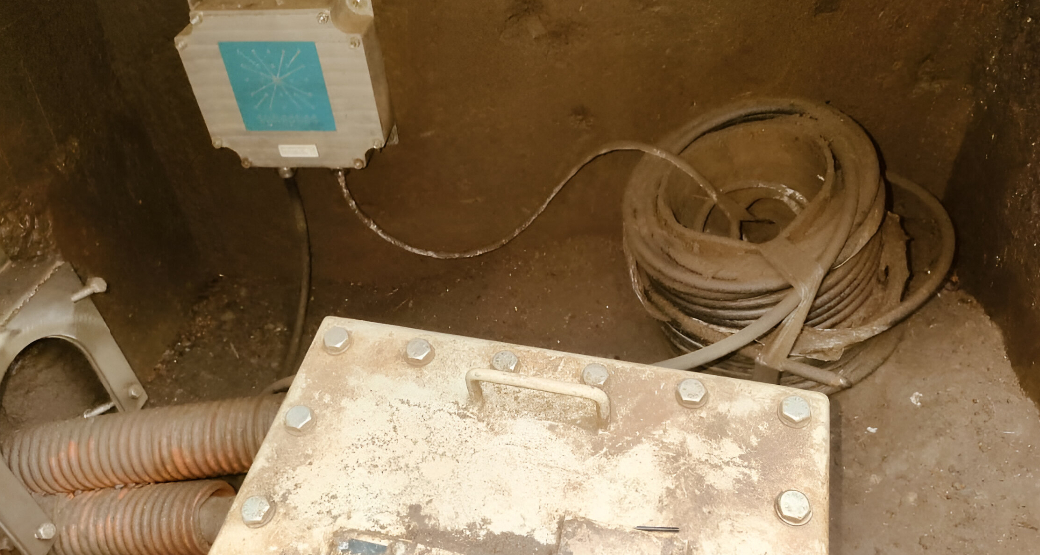
One of 12 PSC-1 installed at the joints
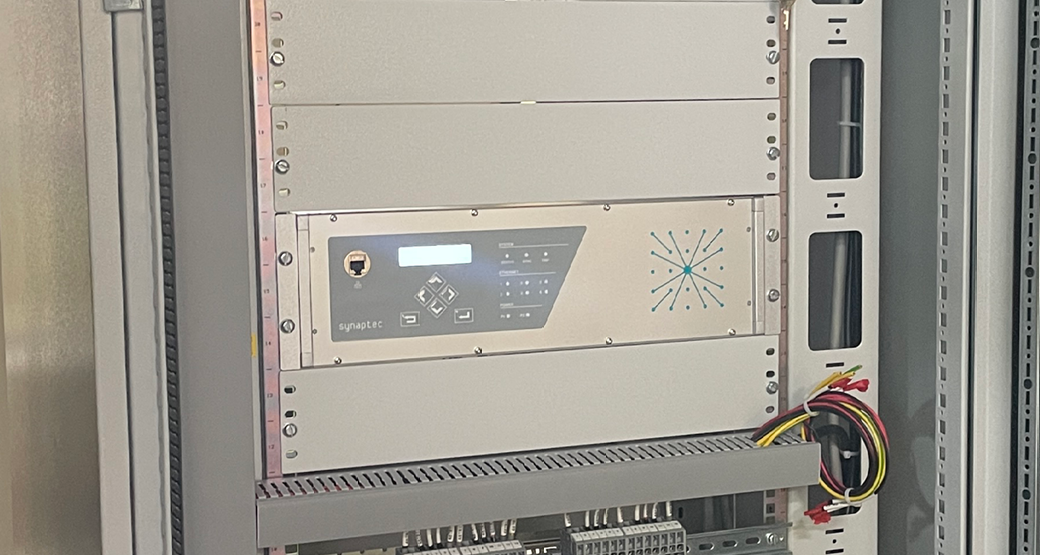
Distributed Electrical Sensing (DES)Interrogator and Synthesis server installed at the substation.
Installation overview
Interested in the results?
Get in touch to arrange a meeting on how the Greenlight solution performed.
Applications


Related posts
The Distributed Mechanical Sensing (DMS) Interrogator
The Distributed Mechanical Sensing (DMS) Interrogator is designed for monitoring of large numbers of point temperature sensors with unprecedented efficiency. The DMS Interrogator allows up to 20 temperature sensors per channel to be multiplexed across up to 8 channels.

Passive Secondary Converter for Current – Three-Phase (PSC3-C) Gen2
The PSC-3-C is Synaptec’s passive, three-phase analogue current sensor for power network applications. It converts Current Transformer (CT) secondary currents into optical signals to be measured, synchronised and digitised over long distances without the need for...
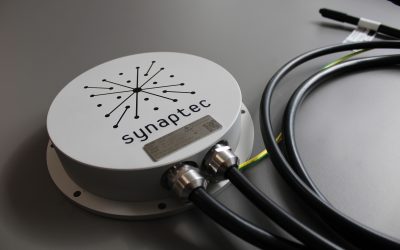
Passive Secondary Converter for Current – Single-Phase (PSC1-C) Gen2
The PSC-1-C is Synaptec’s passive analogue current sensor for power network applications. It converts Current Transformer (CT) secondary current into an optical signal to be measured, synchronised and digitised over long distances without the need for auxiliary power,...
Sectors we support

Power grids

Renewables